Authenticity
What the stamp inside a ring is legally allowed to mean
Gold filled, vermeil, sterling, 950 platinum and laboratory-grown all have fixed thresholds in the FTC Jewelry Guides. Here is each number and how to check it.
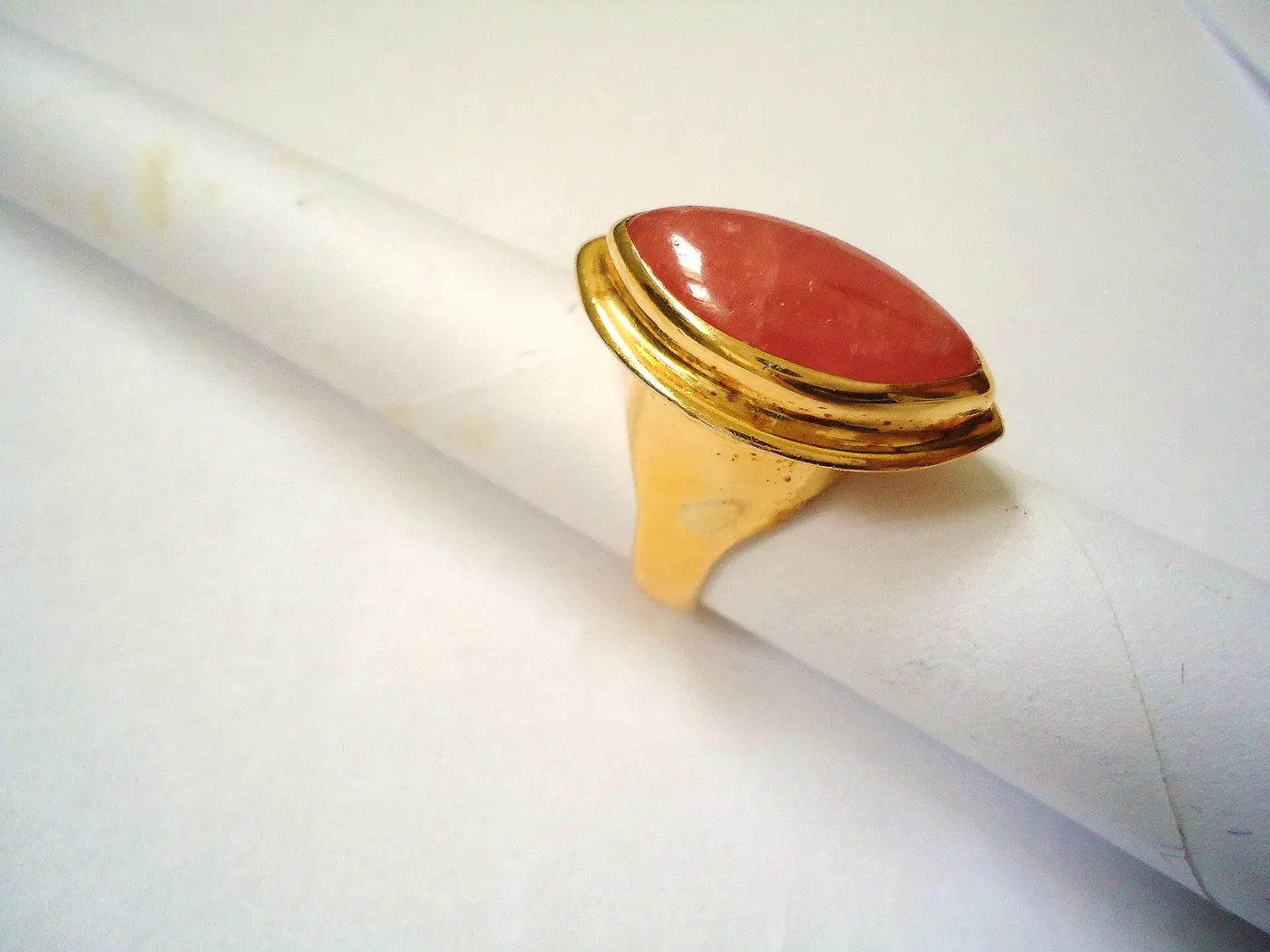
Jewellery descriptions look like adjectives and are actually thresholds. The Federal Trade Commission's Guides for the Jewelry, Precious Metals, and Pewter Industries attach a specific minimum to almost every word a listing uses — gold, gold filled, vermeil, sterling, platinum, diamond — and a listing that uses the word without meeting the minimum is the kind of claim the Commission treats as deceptive.
This guide collects the numbers in one place so you can hold a listing against them. It is a reading of the published Guides, not legal advice, and it makes no claim about any particular seller. Where a figure below is arithmetic rather than a quotation from the Guides, the arithmetic is written out.
Gold: the word is defined by a number
The floor is 10 karat. Below that fineness, the Guides treat describing a product as gold as deceptive, whatever the colour. Above it, the word gold must be immediately preceded by a correct karat designation of equal conspicuousness, which is why a legitimate mark reads 14 Karat Gold or 14K rather than Gold alone. Karat is a fraction of 24, so 14 karat is 14 divided by 24, about 58.3% gold by weight, and 10 karat is about 41.7%.
Plated descriptions are defined by weight and by thickness rather than by colour. Gold Filled requires a mechanically applied gold layer that is at least 1/20 of the weight of the metal in the whole article. Rolled Gold Plate and Gold Overlay use the same mechanical process at a lower floor of 1/40 of the metal weight, and in that case the fraction itself has to appear in the mark, as in 1/40 12 Kt. Rolled Gold Plate.
Electroplating is measured in thickness. Gold Electroplate requires a minimum equivalent to 0.175 microns of fine gold, roughly seven millionths of an inch. Heavy Gold Electroplate requires 2.5 microns, about one hundred millionths of an inch. Vermeil is a separate term: it needs a sterling silver base, gold of at least 10 karat fineness, and the same 2.5 micron minimum — and if a base metal such as nickel sits between the silver and the gold, that has to be disclosed.
| Term on the stamp or in the listing | What it requires | What it still does not tell you |
|---|---|---|
| 14 Karat Gold, 14K | The article is a gold alloy of the stated fineness; 14 karat is about 58.3% gold by weight | Whether the piece is hollow — a hollow centre has to be disclosed next to the mark |
| 1/20 14K Gold Filled | A mechanically applied gold layer of at least 1/20 of the metal weight of the whole article | How that weight is distributed across the surfaces that rub |
| 1/40 12 Kt. Rolled Gold Plate, Gold Overlay | The same mechanical process at a floor of 1/40 of the metal weight, with the fraction shown | Which areas carry the thinnest coverage |
| 12K Gold Electroplate, 12K G.E.P. | An electroplated layer at least 0.175 microns of fine gold thick | Anything about the base metal underneath |
| Heavy Gold Electroplate, Vermeil | At least 2.5 microns of fine gold; vermeil also requires a sterling silver base and gold of 10 karat or better | Whether a base metal sits between the silver and the gold, which must be disclosed |
Karat values converted for convenience: 14 divided by 24 is 0.583, so 14 karat is about 58.3% gold by weight; 10 divided by 24 is 0.417, about 41.7%. Those conversions are arithmetic, not text from the Guides.
Silver and platinum carry their own thresholds
Sterling is a number, not a style. The Guides treat Sterling Silver, Sterling or the abbreviation Ster. as misleading unless the product is at least 925 parts per thousand pure silver, which is 92.5%. Coin and Coin Silver require at least 900 parts per thousand, or 90%. The unqualified word silver needs an accurate fineness designation in parts per thousand immediately before it, which is why a mark like 750 silver is legitimate and silver alone is not.
Platinum works by a ladder. Unqualified, the word requires at least 950 parts per thousand pure platinum — 95%. A product of 850, 900 or 950 parts per thousand may be marked Platinum provided the number precedes it, as in 850Plat. Below 850 but at least 500 parts per thousand, the mark must be accompanied by a clear and conspicuous disclosure of the full composition by name and percentage, and of the fact that the product may not share the properties of traditional platinum. Below 500 parts per thousand, the word may not be used at all.
Every one of these marks carries a legal tolerance, which is the part most buyers never see. Under the National Stamping Act, karat gold articles containing no solder have a permissible tolerance of three parts per thousand, and seven parts per thousand where solder is present. Sterling silver articles have a tolerance of four parts per thousand without solder and ten with it. A stamp is therefore a narrow range rather than a point value, and a small assay difference is not by itself evidence of a false mark.
| Mark | Minimum the Guides require | As a percentage |
|---|---|---|
| Sterling Silver, Sterling, Ster. | 925 parts per thousand pure silver | 92.5% |
| Coin, Coin Silver | 900 parts per thousand pure silver | 90% |
| Platinum, unqualified | 950 parts per thousand pure platinum | 95% |
| 850Plat., 900Plat., 950Plat. | The figure shown is the parts per thousand of pure platinum | 85%, 90% or 95% |
| 585 Plat. and similar | At least 500 parts per thousand platinum, with the full composition disclosed by name and percentage | 50% or more |
Permissible assay tolerances under the National Stamping Act: three parts per thousand for karat gold without solder and seven with solder; four parts per thousand for sterling silver without solder and ten with solder.
Diamond and gemstone words that are defined
The Guides define a diamond as a mineral consisting essentially of pure carbon crystallised in the isometric system, with a hardness of 10, a specific gravity of approximately 3.52 and a refractive index of 2.42. On top of that, the unqualified word diamond may not be used for a stone that has not been symmetrically fashioned with at least 17 polished facets. A rose-cut stone with fewer facets can still be sold as a diamond, but the facet count and shape, or a shape name such as rose diamond, must appear in immediate conjunction with the word.
Weight has its own rules. A carat is defined as 200 milligrams, one fifth of a gram, and a point is one hundredth of a carat. If weight is stated in points it must also be given as decimal parts of a carat, so 25 points has to appear as 0.25 carat as well. A decimal weight must be accurate to the last decimal place, and a figure given to one decimal place must be accurate to the second: 0.5 carat may represent a stone between 0.495 and 0.504 carat. Fractional weights such as a half carat require a conspicuous disclosure that the weight is not exact, with the range used.
Laboratory-grown stones are legitimate and must be labelled. The Guides allow terms such as laboratory-created, laboratory-grown or a manufacturer-created formulation, provided the disclosure is clear and conspicuous and conveys that the product is not a mined stone. Two other phrases are restricted outright: blue white may not describe a diamond that shows any colour other than blue or bluish in normal north daylight, and properly cut may not describe a stone that is lopsided or so thick or thin in depth that brilliance suffers.
| Phrase in the listing | What it is required to mean |
|---|---|
| Diamond, unqualified | A stone meeting the mineral definition and symmetrically fashioned with at least 17 polished facets |
| Laboratory-grown, laboratory-created | Essentially the same optical, physical and chemical properties as a mined stone, with a clear and conspicuous disclosure that it is not mined |
| 0.50 carat | Accurate to the last decimal place; a weight shown as 0.5 carat may represent 0.495 to 0.504 carat |
| 25 points | One quarter of a carat, which must also be stated as 0.25 carat |
| Blue white | Restricted: it may not be used for a stone showing any colour other than blue or bluish in normal north daylight |
A carat is 200 milligrams and a point is 1/100 of a carat, so 25 points is 50 milligrams. Treatments to diamonds and to other gemstones carry their own disclosure obligations in the same part of the Guides.
Reading a listing against the thresholds
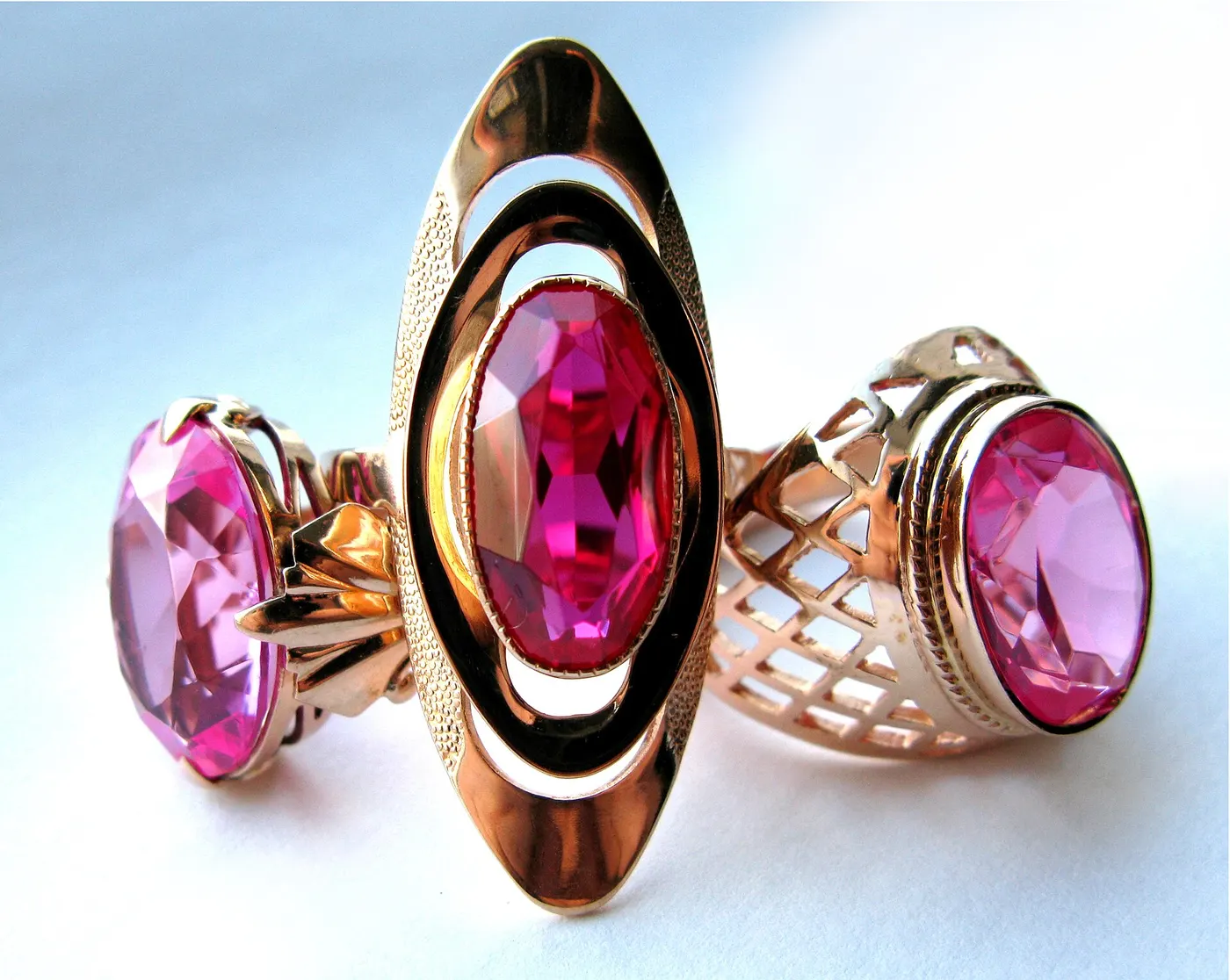
The check is mechanical once you know the numbers. Find the metal word, find the number that is supposed to sit immediately before it, and see whether it is there. A listing that says gold vermeil with no karat figure, or sterling-plated, or 14K gold filled without the 1/20 fraction, is incomplete against the Guides rather than ambiguous.
Photographs of the stamp are worth asking for on any secondhand purchase, because the Guides also require, through the National Stamping Act, that whoever applies a quality mark apply their trademark or name to the article as well. A karat mark with no maker's mark anywhere near it is a specific absence, not a style choice.
Where the listing describes a stone, the three things to look for are the facet qualification, the weight precision and the laboratory disclosure. The absence of any one of them on a stone described in carats is the point at which to ask the seller for the missing figure before paying.
- Find the metal word and check a karat or parts-per-thousand figure sits immediately before it
- For a plated piece, check for the fraction — 1/20 for gold filled, 1/40 for rolled gold plate — or the micron class
- For vermeil, confirm a sterling base and gold of at least 10 karat are both stated
- For silver, confirm 925 for sterling or 900 for coin silver, and treat an unqualified silver as incomplete
- For a stone sold in carats, check the weight precision, the facet qualification and any laboratory-grown disclosure
- Ask for a photograph of the stamp, including the maker's trademark or name next to the quality mark
What the Guides are, and what they are not
The Jewelry Guides are not a licensing scheme and they do not certify anything. They set out the Commission's current thinking about claims for jewellery and articles made from precious metals and pewter, they confer no rights on any person, and they do not themselves bind a seller. What they do is describe the practices the Commission treats as unfair or deceptive under Section 5 of the FTC Act, which is why they are the right yardstick for reading a listing.
A stamp is also not an assay. The permissible tolerances set out above mean a mark describes a range, and a mark can be applied abroad by a party who has never been tested. The practical consequence is that the Guides tell you what a word must mean, while only a test tells you what a particular piece is — and for most buyers the first is enough to filter out listings that are missing a required figure.
Before you buy
- Write down the exact metal wording from the listing before comparing prices
- Check a karat figure or a parts-per-thousand figure sits immediately before the metal word
- For plated pieces, look for the 1/20 or 1/40 fraction or the micron class
- Confirm sterling means 925 parts per thousand and coin silver means 900
- For platinum below 950 parts per thousand, look for the full composition disclosure
- For a stone, check facet qualification, weight precision and any laboratory-grown wording
- Request a close photograph of the stamp including the maker's trademark or name
Questions readers ask
- Is 9 karat gold legal to sell as gold in the United States?
- Not under the Jewelry Guides. They treat describing an alloy below 10 karat fineness as gold as deceptive, which is why 9 karat pieces common in some other markets are usually described by fineness alone when sold here. The word itself is the problem, not the metal, and a listing can still sell the piece accurately by stating its composition.
- What is the difference between gold filled and gold plated?
- Weight and process. Gold Filled requires a mechanically applied layer of at least 1/20 of the metal weight of the whole article, with the karat fineness stated immediately before the term. Gold Electroplate is an electrolytic layer measured in thickness, with a floor equivalent to 0.175 microns of fine gold. The gold-filled layer is roughly two orders of magnitude thicker.
- Does vermeil tarnish like silver?
- Vermeil is a sterling silver base under at least 2.5 microns of gold of 10 karat or better, so what you wear is the gold layer until it wears through. The Guides also require a disclosure if a base metal such as nickel sits between the silver and the gold. That disclosure is worth looking for, because it describes a different construction entirely.
- How exact is a half-carat stone?
- A weight stated to one decimal place must be accurate to the second, so 0.5 carat may represent a stone from 0.495 to 0.504 carat. If the seller writes the weight as a fraction instead, the Guides require a conspicuous disclosure that the weight is not exact, together with the range being used for that fraction.
- Is a laboratory-grown diamond allowed to be called a diamond?
- Yes, provided the description carries a clear and conspicuous qualifier such as laboratory-created or laboratory-grown that conveys the stone is not mined. The Guides accept that such stones have essentially the same optical, physical and chemical properties as mined ones. What is not permitted is the unqualified word diamond on a stone that was grown.
Sources
- 16 CFR Part 23 — Guides for the Jewelry, Precious Metals, and Pewter Industries, 2026 edition (karat, gold filled, vermeil, silver, platinum, diamond definitions and National Stamping Act tolerances) — checked 2026-11-03
- Federal Trade Commission — Advertising and Marketing business guidance index (claims must be truthful, non-deceptive and evidence-based) — checked 2026-11-03
- Federal Trade Commission — Advertising FAQ's: A Guide for Small Business (substantiation before an ad runs; disclosure of terms affecting cost near the price) — checked 2026-11-03
Some links on this site can earn us a commission. That does not change which product a guide recommends, and it adds nothing to your price. Advertising is not enabled on this site yet. When it is, ads will be labelled and kept visually separate from the guides.